Tactile surfaces and slip data: ask for the test conditions
When slip performance is specified, request the test method and conditions for the actual tactile surface. A generic anti-slip description is not a numerical result.
Selection considerations
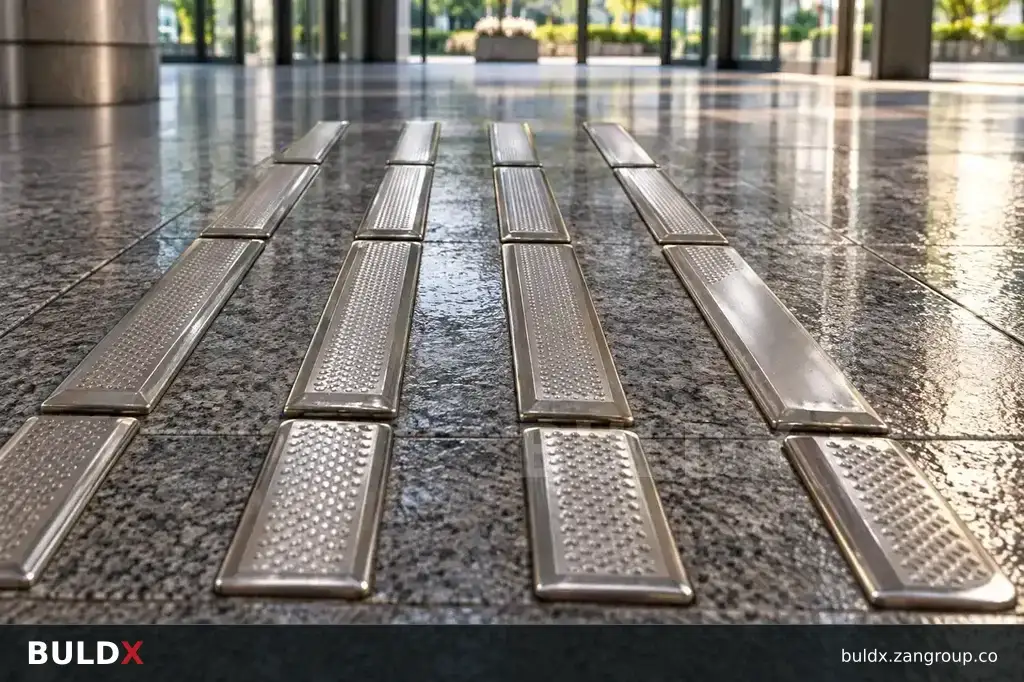
Identify wet or dry use and any finish applied to the product. Compare supporting documents against that configuration rather than a different material or pattern. Keep performance requirements consistent with the project's specification and jurisdiction.
Inspect the surrounding floor and cleaning plan as part of the route review. Contamination, loose components or worn surfaces can affect the installed condition. Do not infer slip performance from the pattern photograph alone. Record the selected code and supporting document reference in the approval package.
Before you specify or order
- Request method and test conditions
- Match data to the selected surface
- Coordinate surrounding floor and maintenance
Relevant BULDX catalogue examples
These records illustrate the product types discussed. Compare the full specifications before selecting; listing here does not establish project suitability or make the items interchangeable.
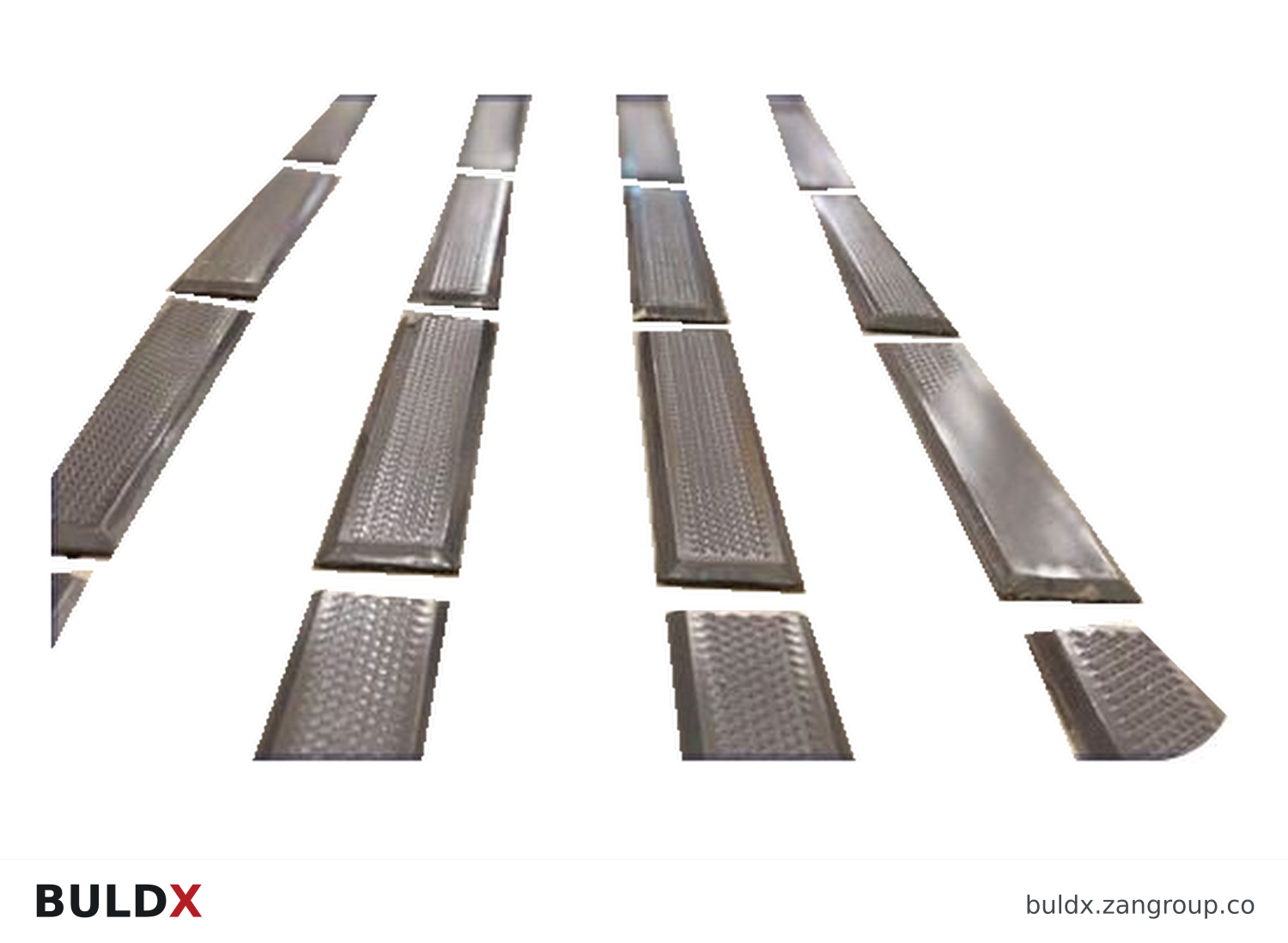
BDX-TS-DIR · Product geometry from the catalogue; a family illustration may be shared by variants. Consult the selected technical documents for dimensions and the approved fixing detail.| Product and code | Selected catalogue fields |
|---|---|
BDX-TS-DIRDirectional Tactile SurfaceTactile Surfaces |
|
BDX-TS-WRNWarning Tactile SurfaceTactile Surfaces |
|
Common question
Does a raised pattern prove a slip rating?
No. A rating needs relevant documented testing for the specified surface and conditions.
References and scope
Product fields are from the BULDX catalogue. Confirm the current selected drawing, supporting performance documents and approved project detail before ordering. External references, where listed, provide background guidance and do not certify these products.