Speed bump modules: width, ends and installation scope
Specify a speed bump as a complete arrangement of modules, ends and fixings. The dimensions of one module do not describe the full crossing width.
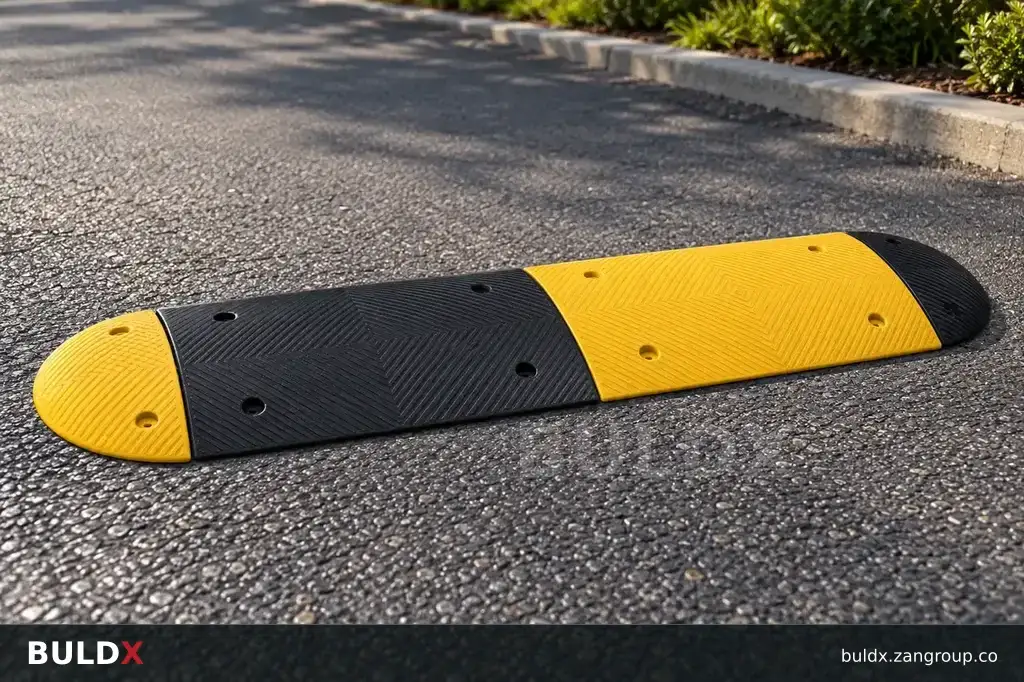
Selection considerations
Use the approved traffic plan to locate the installation. Record lane width, drainage, pedestrian crossings and service routes. Check which end pieces are needed and how the system terminates beside the roadway.
Compare module height, width and material separately. Do not infer an exact vehicle speed or universal load limit from its shape. Coordinate markings and visibility with the site design. Ask for the product-specific fixing instructions and include substrate preparation in the scope so loose or uneven sections do not become a maintenance problem.
Before you specify or order
- Draw the complete module layout
- Include ends and fixings
- Coordinate drainage and route interfaces
Relevant BULDX catalogue examples
These records illustrate the product types discussed. Compare the full specifications before selecting; listing here does not establish project suitability or make the items interchangeable.
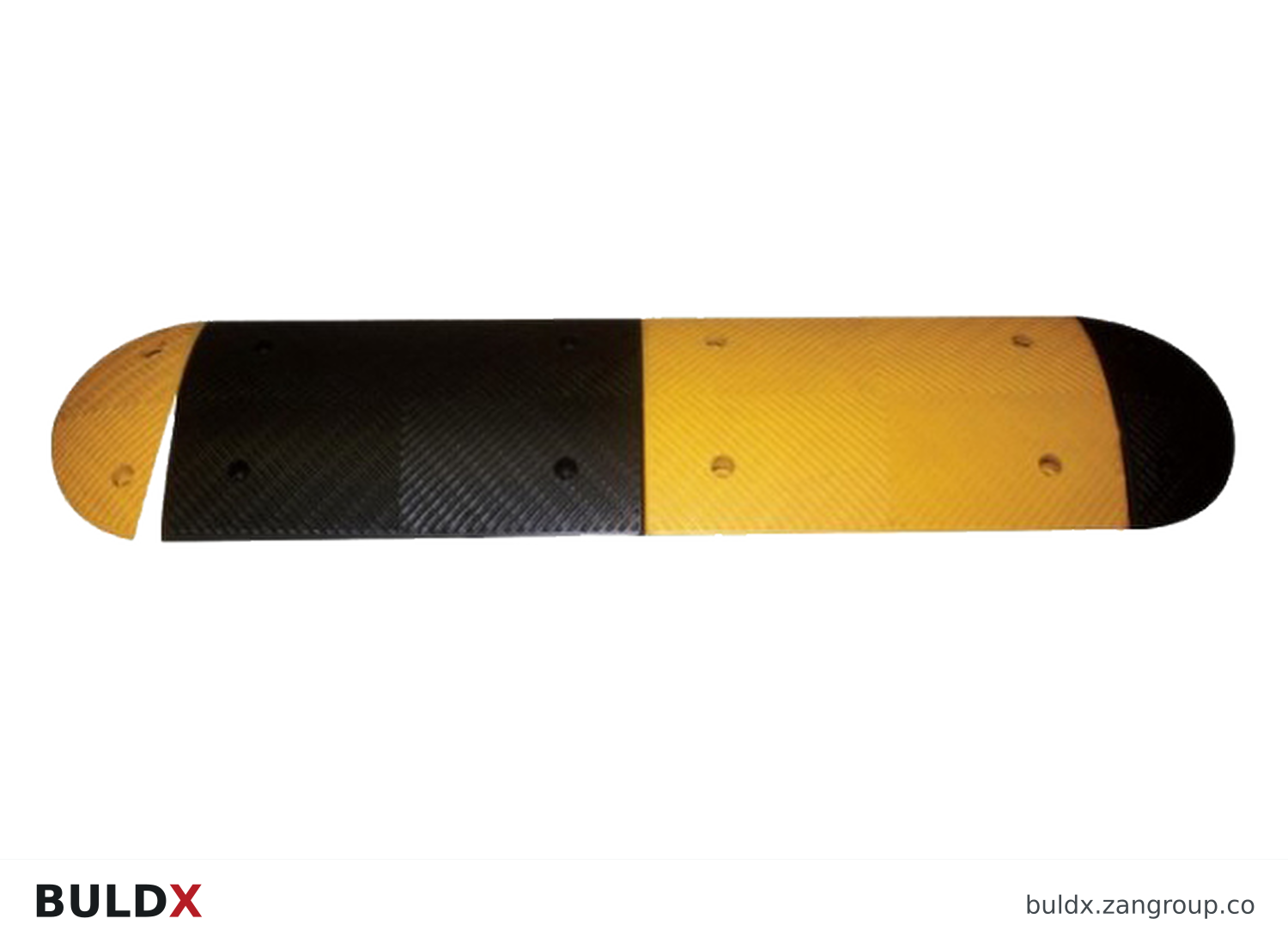
BDX-SB-RB-300500 · Product geometry from the catalogue; a family illustration may be shared by variants. Consult the selected technical documents for dimensions and the approved fixing detail.| Product and code | Selected catalogue fields |
|---|---|
BDX-SB-RB-300500300 × 500 × 45 mm Rubber Speed BumpSpeed Bumps |
|
BDX-SB-RB-400500400 × 500 × 40 mm Reflective Speed BumpSpeed Bumps |
|
Common question
Does a module price represent the complete speed bump?
No. The number of modules, end pieces and installation components must be included.
References and scope
Product fields are from the BULDX catalogue. Confirm the current selected drawing, supporting performance documents and approved project detail before ordering. External references, where listed, provide background guidance and do not certify these products.